Equipment-as-a-Service
Differentiate your solutions
traptice is a quantum leap for pest control. Our product moves the physical detection of insects into the cloud and delivers a smart solution for pest control companies as well as end customers.

Benjamin Ruoff
Managing Director
Wains GmbH
An evolving world requires evolving business models
Reduce barriers to adoption
Capital investment requires a lengthy review and approval processes. Providing a pay-as-you-use business model reduces customers’ up-front costs and their TCO for your equipment. By reducing your customers’ risk through flexible equipment acquisition options, you can expand the market for your products and build long-term customer relationships.Stay connected to customers
Customer expectations are rising. They want to pay for what they use, have someone else worry about uptime, and expect parts to be replaced only when necessary. Monitor and optimize performance of your connected equipment to meet customer needs more efficiently.Generate resilient revenue
Offering products as a service creates resilient revenue streams and improved margins as an alternative to building your business on hardware sales. With greater insights and control over your equipment, you can enhance customer uptime, extend machine life, and negotiate performance-based contracts with confidence.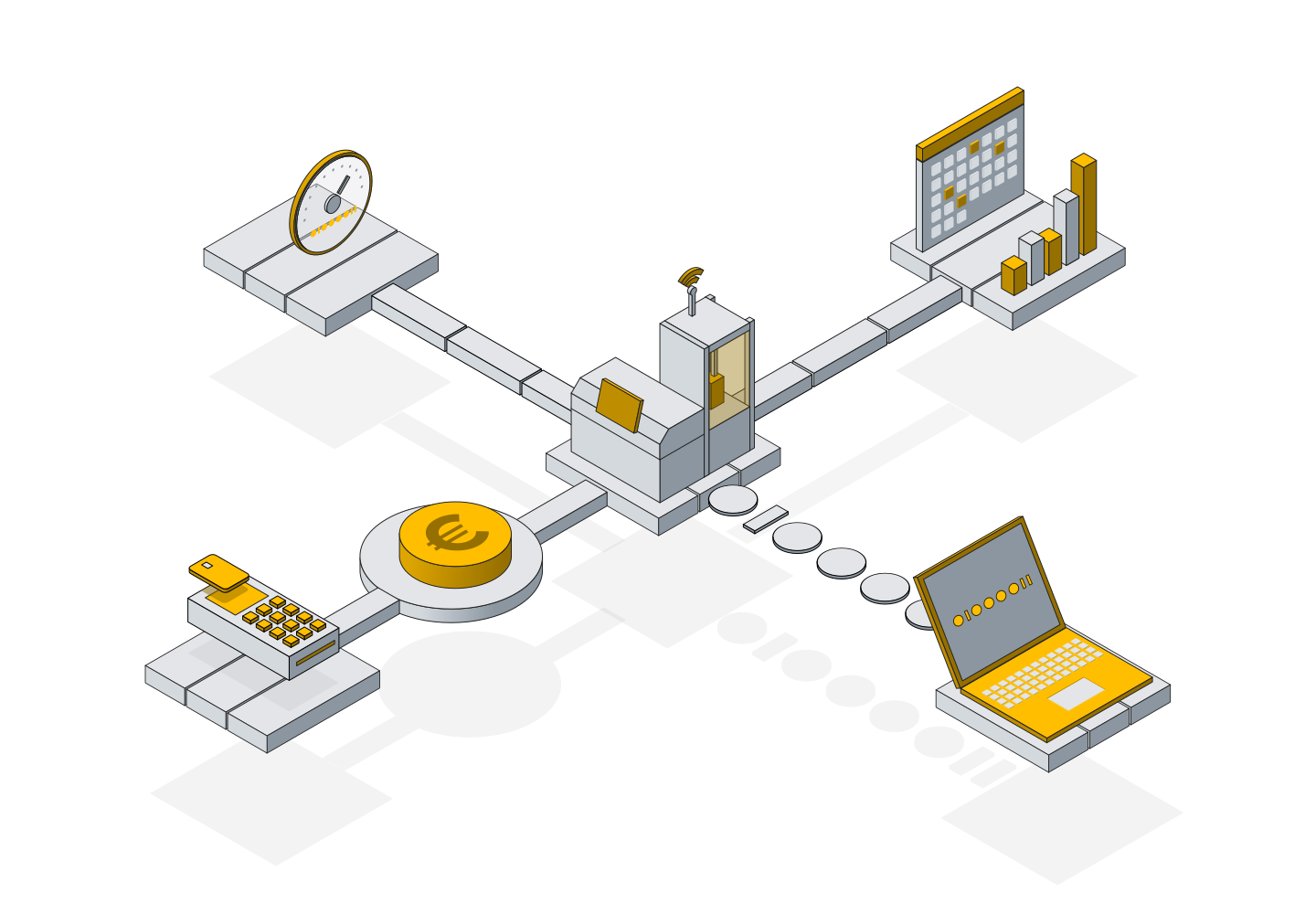
The numbers tell the story
$237 billion
expected size of the EaaS market in 2035.
Source: Market Research Future
8x
greater total shareholder return among machinery companies that combine hardware, software, and services, compared to laggards.
Source: Beecham Research
50%+
of equipment sold is now IoT-enabled, opening up opportunities for more advanced business models.
Source: IoT Analytics
Cumulocity enables EaaS business models
40,000
6 months
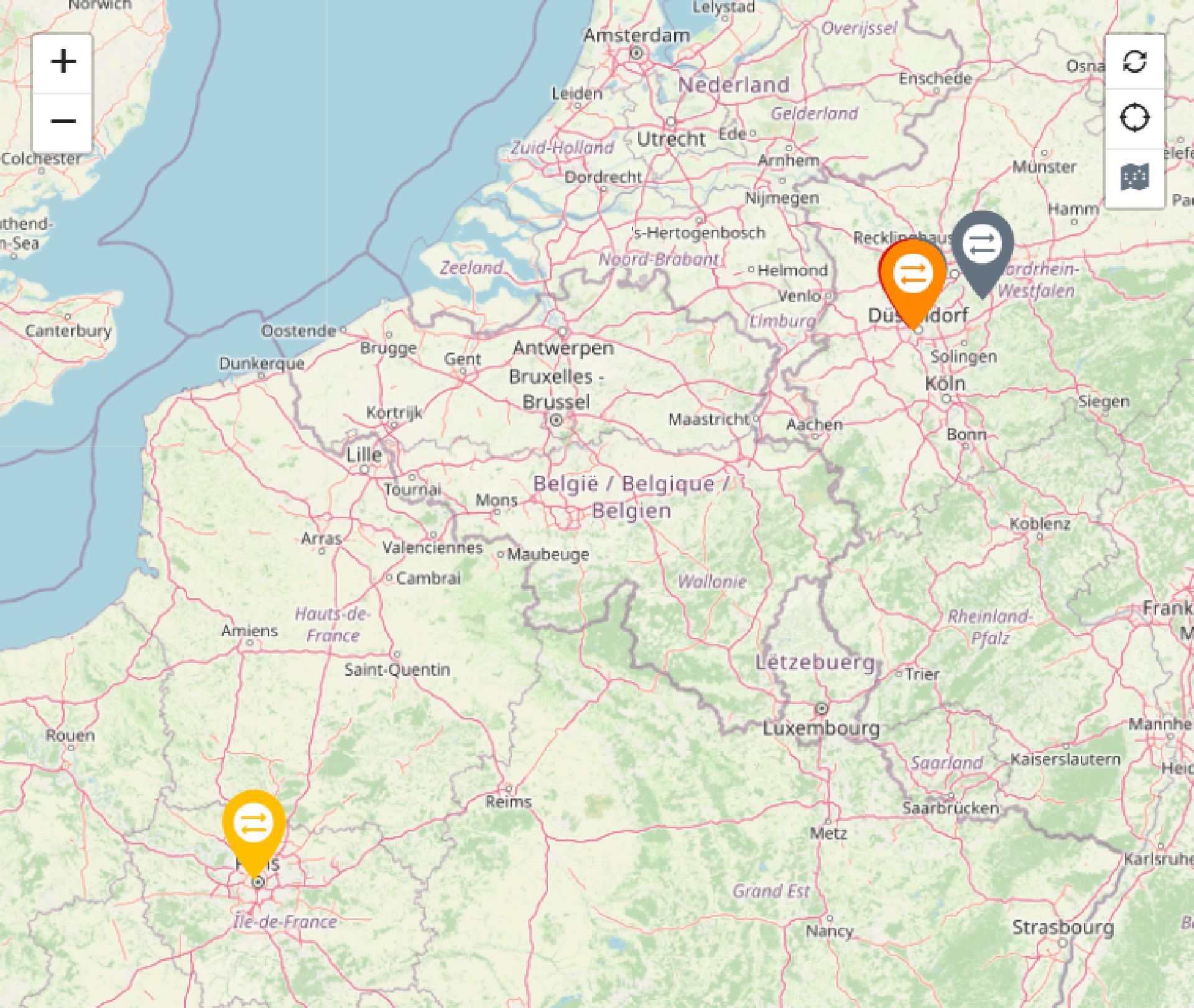
Track your assets anywhere in the world
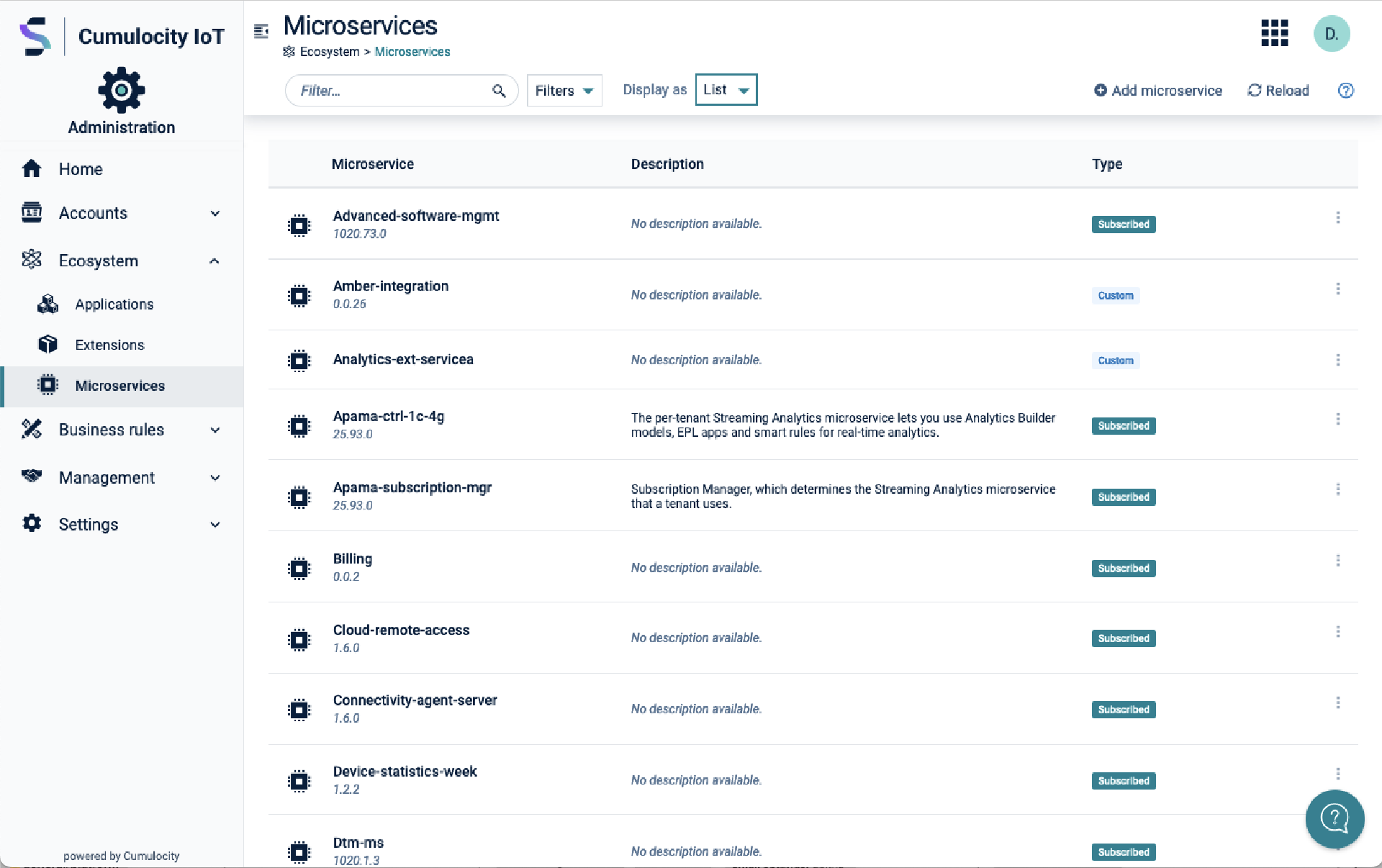
Simplified microservices management
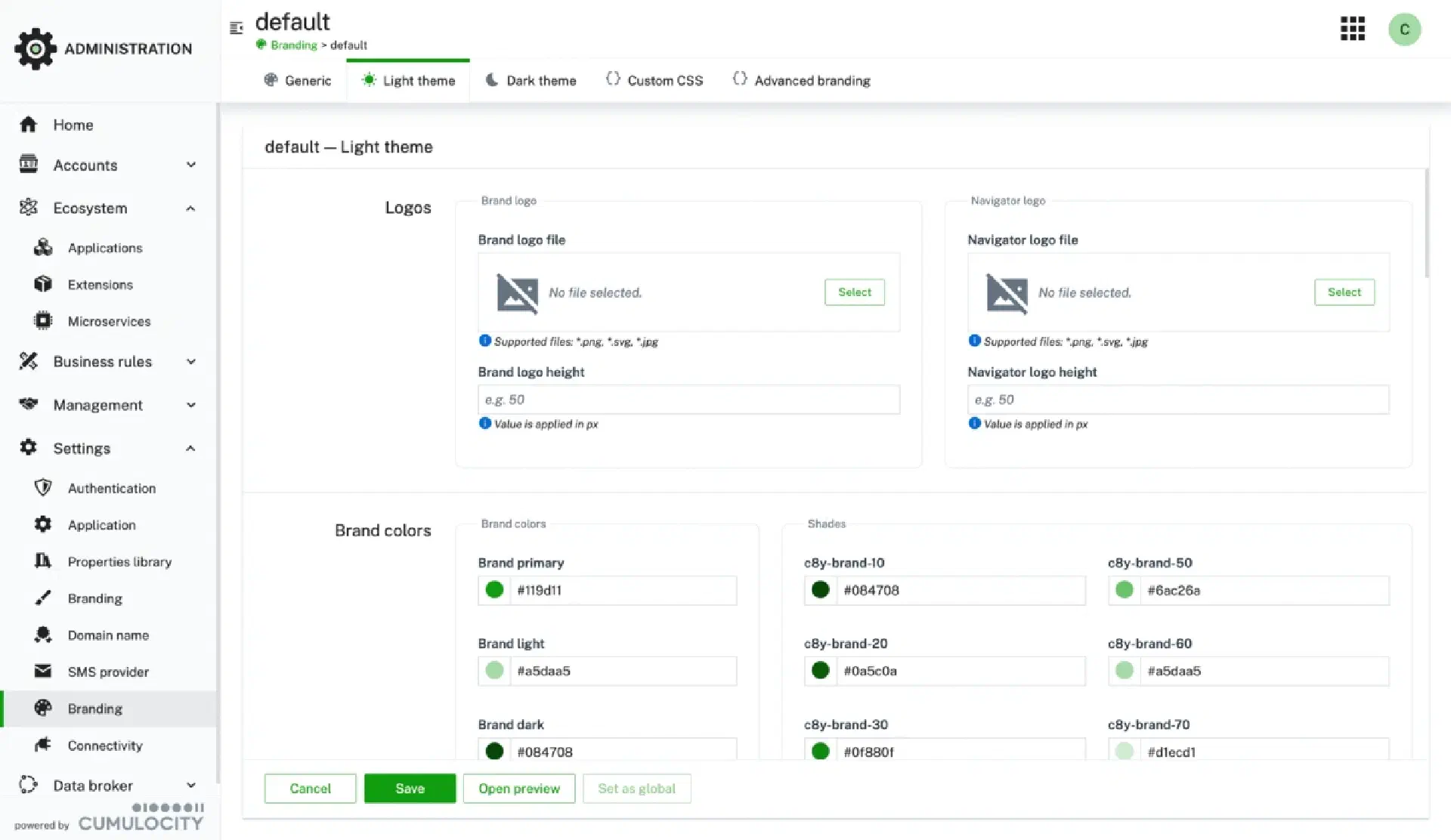
Adopt your brand identity
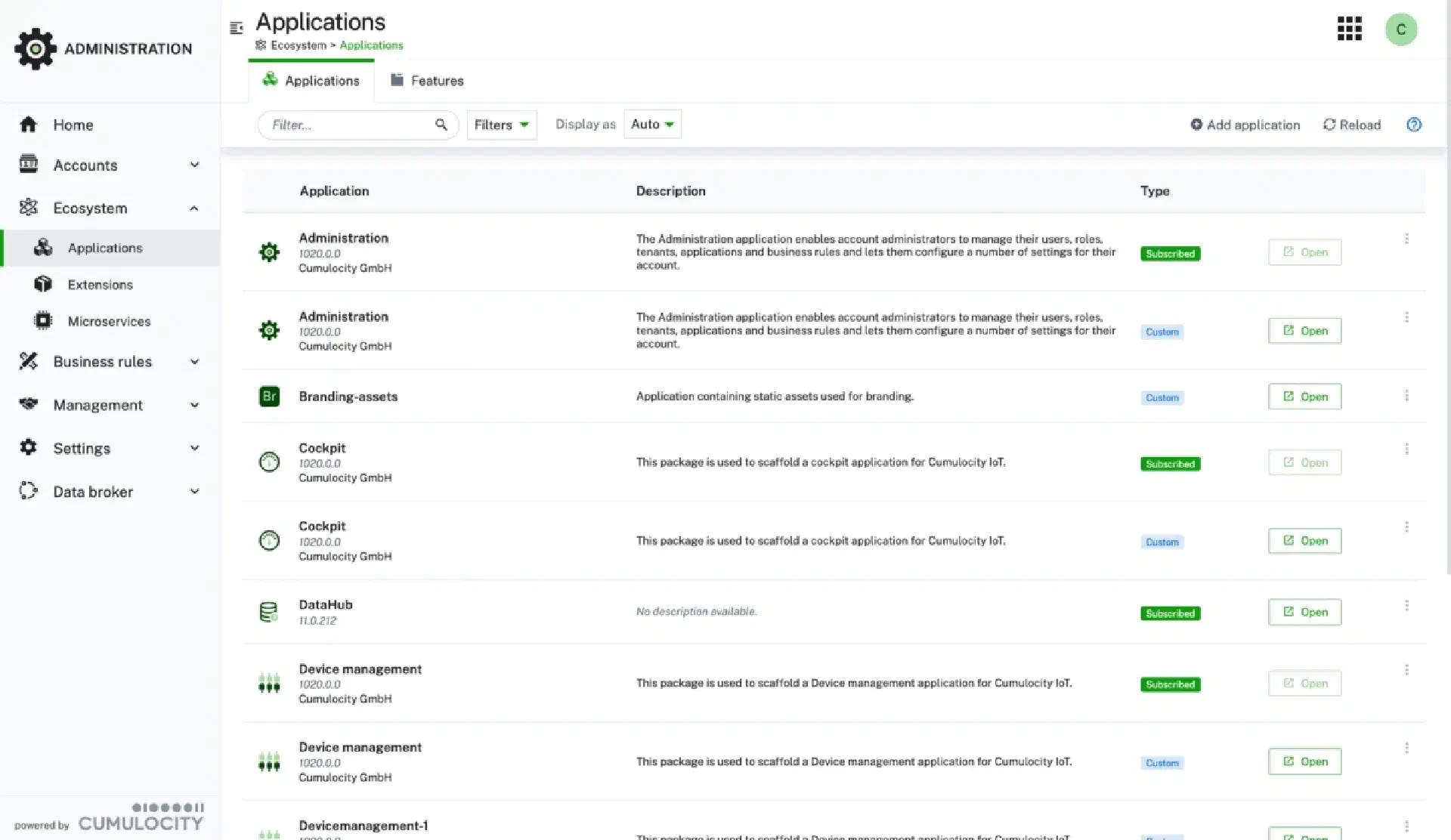
Securely roll out services to all of your customers with multi-tenancy
Work with Cumulocity experts from our Professional Services team
Related customer stories
Frequently asked questions
Equipment as a Service (EaaS) is a business model in which, rather than purchasing an asset for one upfront capital expenditure, a company rents the asset and pays for it in regular instalments based on actual usage. The payment is a bundle of equipment, service, and upgrade costs. It shifts responsibility for maximizing the uptime on the asset from the operator to the seller, and allows the purchaser to replace capital expense with operating expenses.
For the sellers of equipment:
- Subscription payments make revenue more predictable
- Margins on equipment sales are being squeezed, making a bundling with services potentially more profitable
- Fosters a closer relationship with the operator, building brand loyalty
For the operators of equipment:
- The costs of operating the equipment are more directly tied to their revenue generation
- Replaces the capital expense for equipment and spare parts with operating expenditures, improving the balance sheet
- More responsibility for maintaining uptime and service is shifted to the seller of the equipment, reducing your operational risks
- It is easier to scale up and down as production needs change