AI+ML Operationalization
Automate turning IoT data into intelligent decisions with Cumulocity
With our new IoT platform boosted by machine learning it’s not just about smarter solutions, it’s also about our own smarter processes. Our team needs to monitor 25 or more clients and our workforce is already overloaded—which is why we use machine learning to continually improve efficiency—for our customers and ourselves. It’s a win-win.

Jair Junior
Automation Projects Manager
Mayekawa Mycom
AI + IoT = A new reality
The race to operationalize AI
Manufacturers and operators adopting AI within IoT are achieving faster innovation cycles and more resilient operations, with cost reductions for automation as high as 90%. But while every organization is investing in AI, fewer than 30% of CEOs are happy with the return on investment to date, according to Gartner. Operationalizing the AI investment will transform the competitive landscape for OEMs and equipment operators.Data management is becoming even more critical
The biggest challenge in integrating AI with IoT is managing the vast amount of data from different sources necessary to find insight. AI requires massive datasets to train machine learning models, and collecting, storing, processing, and filtering this data is a complex task. Ensuring data quality, consistency, and accuracy is a critical first step.Orchestrating from edge to cloud
Data needs to be processed quickly to enable real-time decision-making, which necessitates powerful computational infrastructure on the cloud to process data and train the models as well as at the edge to reduce latency and operate in real-time.Security and privacy
The integration of AI and IoT also amplifies security and privacy risks. IoT devices can be susceptible to cyberattacks, and adding AI into the mix increases the attack surface. AI models rely heavily on the data they receive from IoT sensors, and any tampering with that data—either through device compromise or man-in-the-middle attacks—can result in inaccurate decisions, potentially leading to dangerous consequences. Ensuring end-to-end security for AIoT systems is crucial.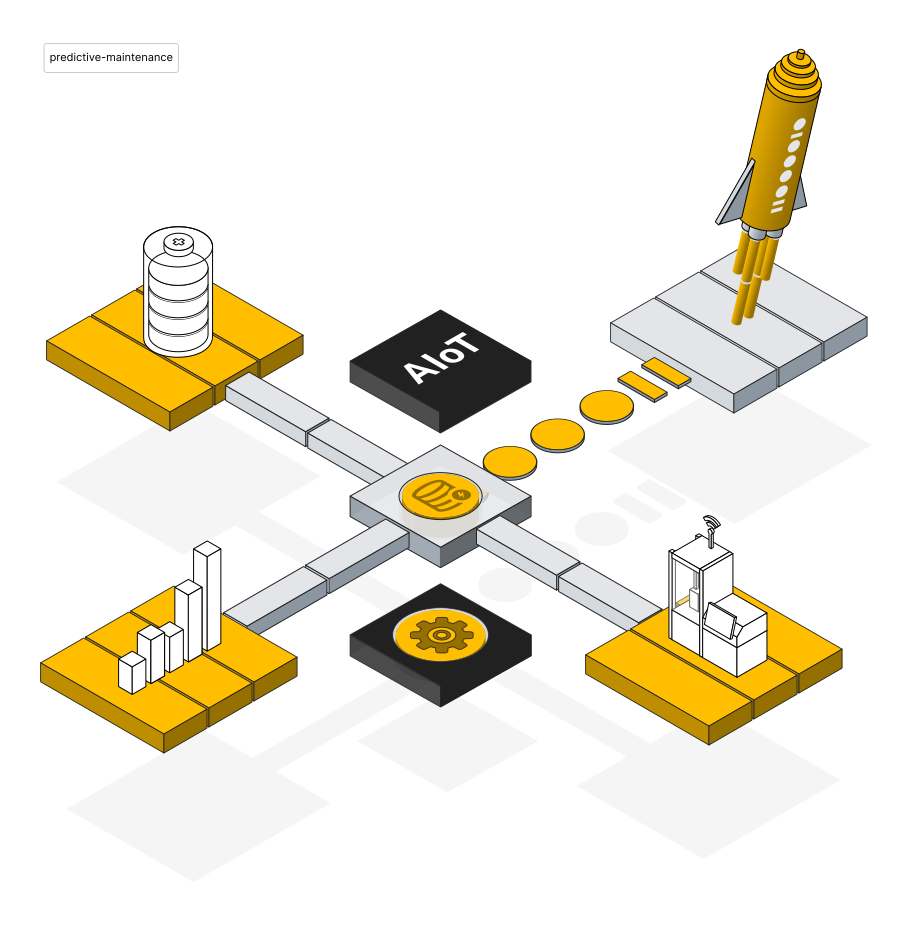
The numbers tell the story
$80 billion
size of the market for AIoT solutions by 2030
90%
reduction in automation costs after installing AI-enabled pick and place robots
Source: World Economic Forum
42%
of companies reporting they are integrating AI across most or all areas of their business
Source: IBM
Operationalize AI with Cumulocity

50%

16%

3%
Empower smart data transformations
The AIoT revolution begins by converting raw sensor data into AI-ready assets through flexible transformation options.
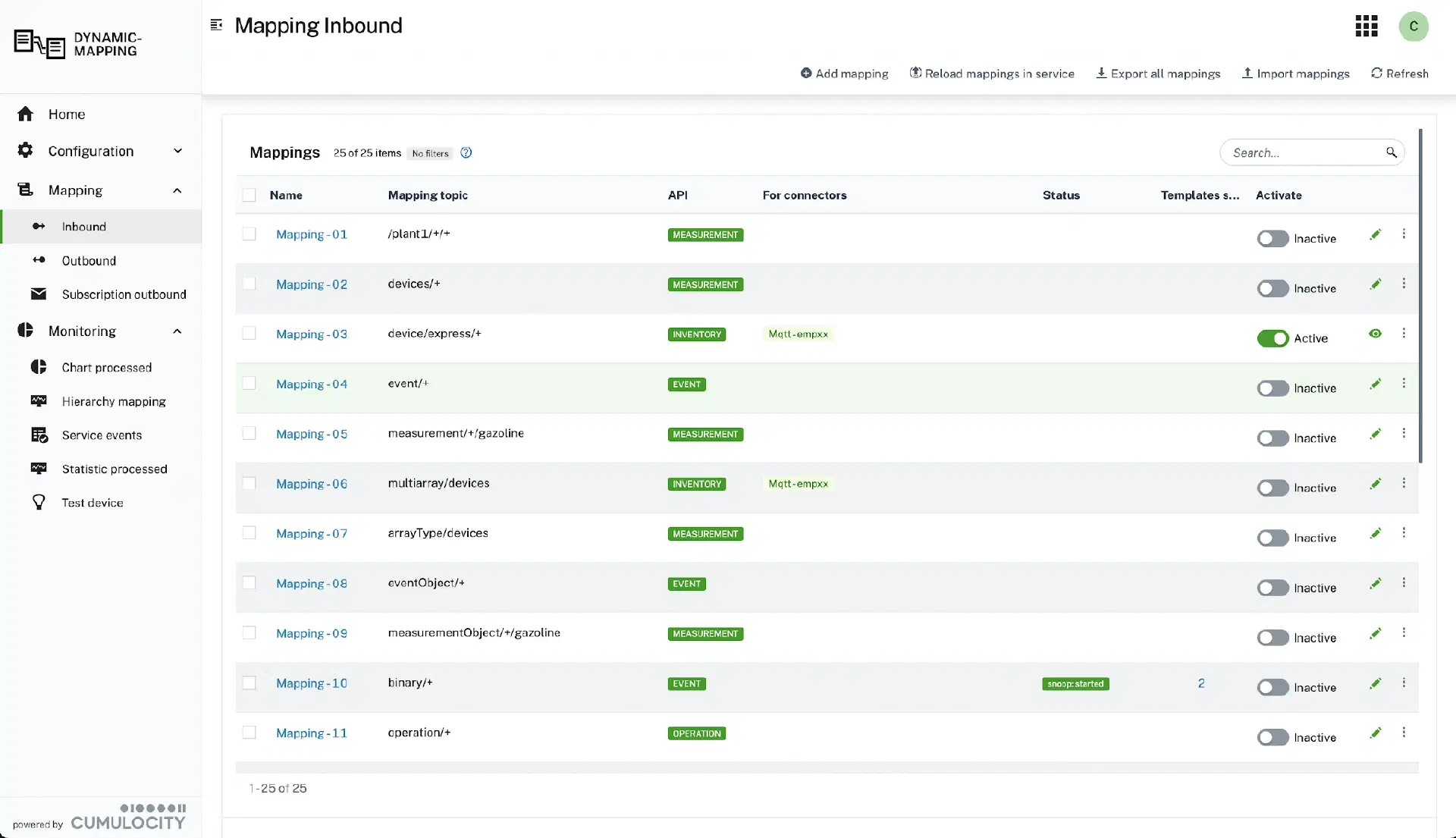
Use our visual Dynamic Mapper to standardize formats and enrich data without coding, or deploy custom microservices for complex transformations.
Contextualize your equipment data by leveraging Cumulocity Digital Twin Manager to create meaningful relationships between devices, systems, and business processes.
Make your data available for downstream analytics
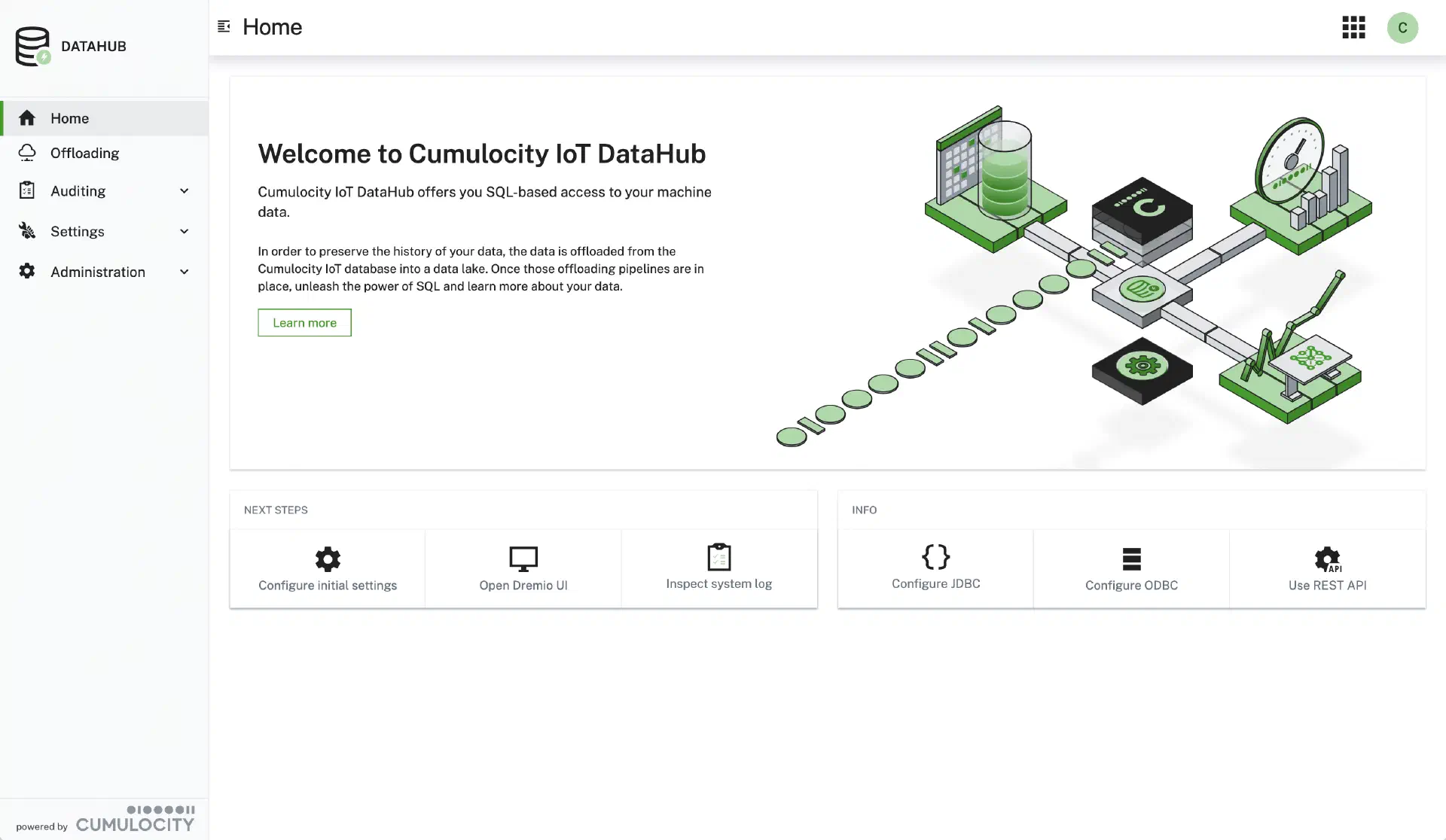
In order to effectively analyze data from your connected assets, you first must be able to easily offload the data and make it available.
With Cumulocity DataHub you can effortlessly create offloading pipelines to store IoT data in your preferred historical or analytical data store and ensure seamless accessibility for downstream BI reporting and AI/ML model training.
Integrate cameras for vision AI

Deploy AI from edge to cloud
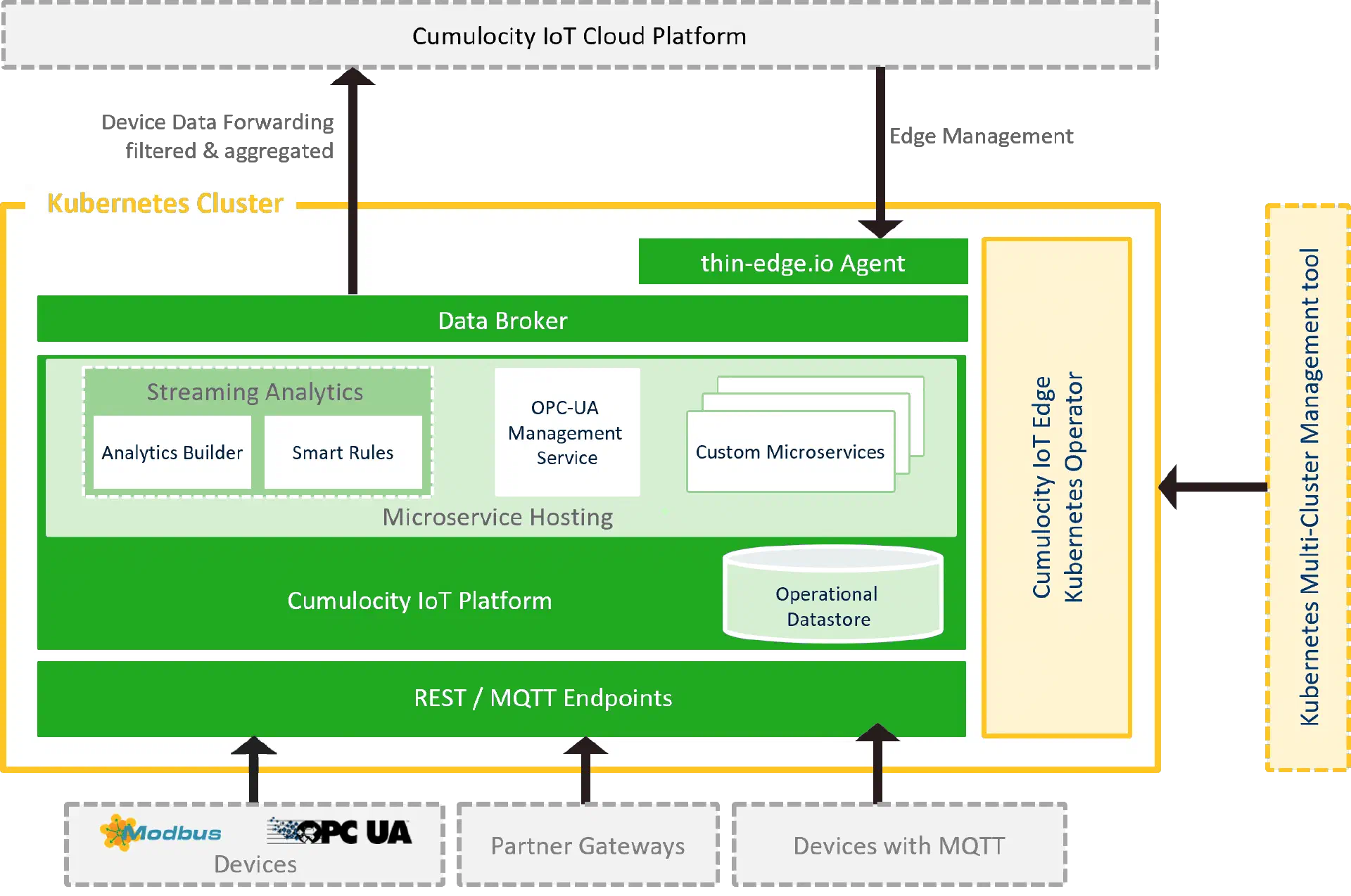
Not all AI/ML use-cases thrive on cloud-based model inferencing. Some demand edge or device processing for privacy, data transfer, or latency concerns.
Our device & software management allows you to manage your Edge AI/ML deployments, including lifecycle management with different versions, monitor model status and performance.
For more detailed information, visit the Cumulocity documentation.
Integrate with an AIoT platform that supports a diverse range of use cases
Rely on a platform with cybersecurity built-in
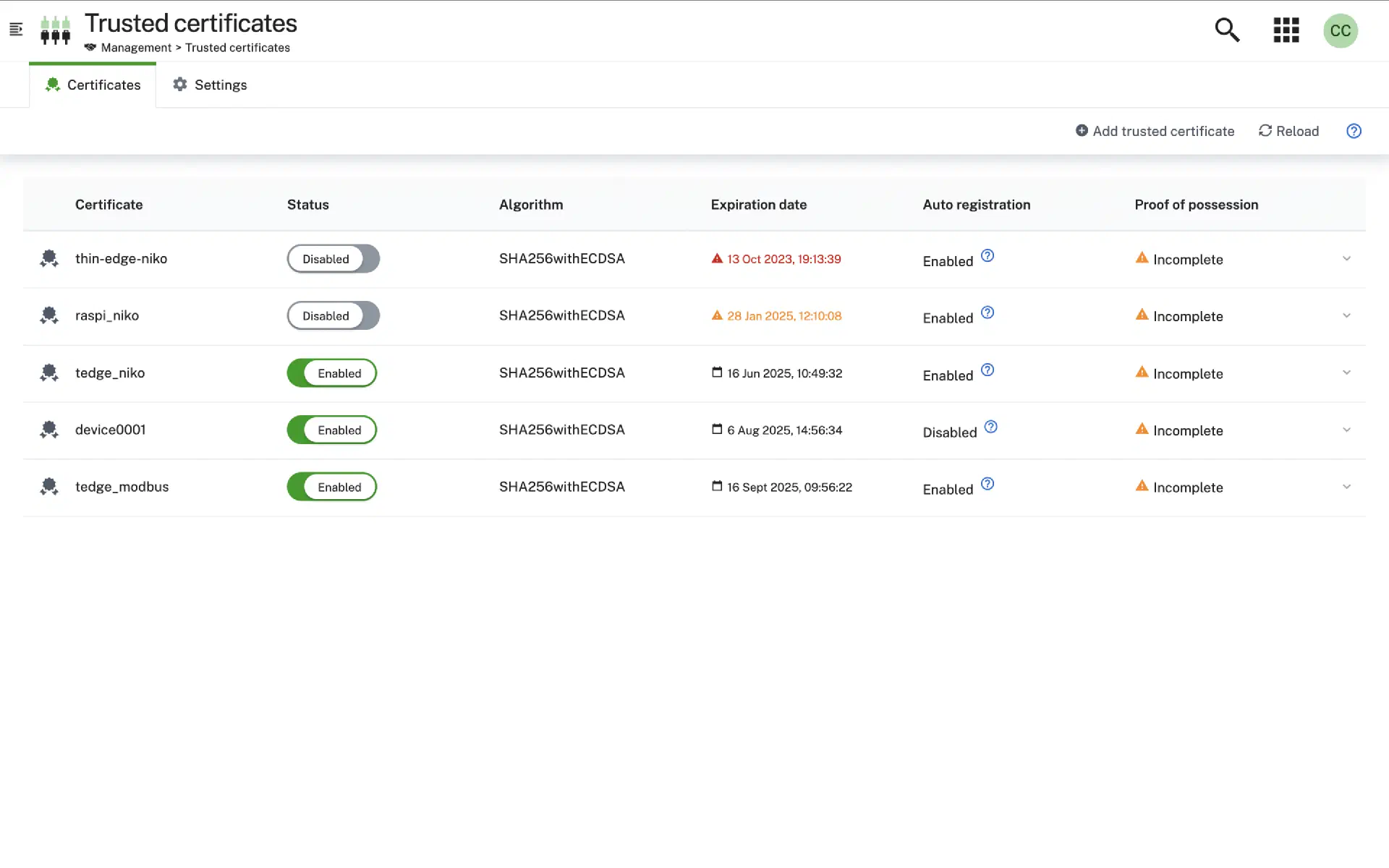
Cumulocity is the preferred IoT platform for leaders across industries from telecommunications to medical equipment manufacturers and government institutions, all of whom must meet the most stringent security requirements. Cumulocity has been granted Authority to Operate (ATO) by the US Federal Government, a strong testament to our commitment to the highest level of security.
Visit our Trust Center to learn more.
Frequently asked questions
AIoT refers to the integration of the device connectivity of IoT with the decision-making power of Artificial Intelligence, enabling equipment makers to transform their products into smart assets that improve performance by identifying anomalies, predicting maintenance needs, and reducing response times. As the technology continues to reshape the way companies develop products, the market for AIoT is projected to exceed $250 billion by 2030. Learn more about AIoT here.
At Cumulocity, we support two key pathways for integrating AI and IoT, Actionable Analytics and Intelligent Agents.
Actionable Analytics is the use of AI and machine learning tools to analyze IoT data, generate insights, and automate actions. Actionable Analytics improve asset performance by enabling real-time decision-making, enhancing use cases such as predictive maintenance and anomaly detection.
Intelligent Agents is the integration of Generative and Agentic AI like chatbots and AI assistants to enable natural language interaction and intelligent automation. It enhances the user experience and allows for improved productivity by automating workflows and allowing for conversational interactions.
Use cases for Actionable Analytics AIoT include:
- Predictive maintenance: Predicting the remaining useful life of an asset, allowing for more proactive rather than reactive maintenance. Flexco uses predictive analytics to more efficiently schedule their field maintenance.
- Anomaly detection: Identifying items that are nonconforming to a specific standard to improve quality assurance.
- Vision AI: Automated detection and classification of input from camera systems. Wains uses vision AI to classify pests that are captured using their Smart Traps, allowing for remote monitoring of pest infestations.
Use cases for Intelligent Agents include:
- Alarm resolution: An AI chatbot explains machine behavior and walks through step-by-step process for resolving alarms, with recommended fixes and actions at each step.
- Enhanced queries: Embedded chatbots convert plain language queries into precise API calls, simplifying data access.
Want to learn more about how AIoT is transforming industry?
Learn more about how organizations like yours are using AIoT to improve operations, speed decision-making, and introduce new business models to their customers.