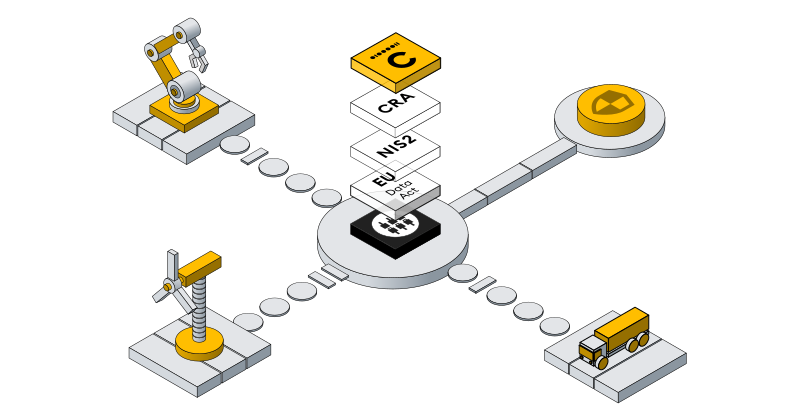
Europe’s new digital regulations are reshaping how connected products are built and secured for companies operating in the EU market. The Cyber Resilience Act (CRA), NIS2 Directive, EU Data Act and EU AI Act create a unified framework for security, resilience, and data transparency that shapes global expectations. For smart equipment manufacturers, compliance is also a roadmap to customer trust, market access, and long-term competitiveness.
Get the guide to Europe’s Digital Regulatory Landscape Read the whitepaper
The Four Pillars of Europe’s Digital Framework
1. Cyber Resilience Act (CRA)
What is the focus of CRA? Secure-by-design products and lifecycle cybersecurity
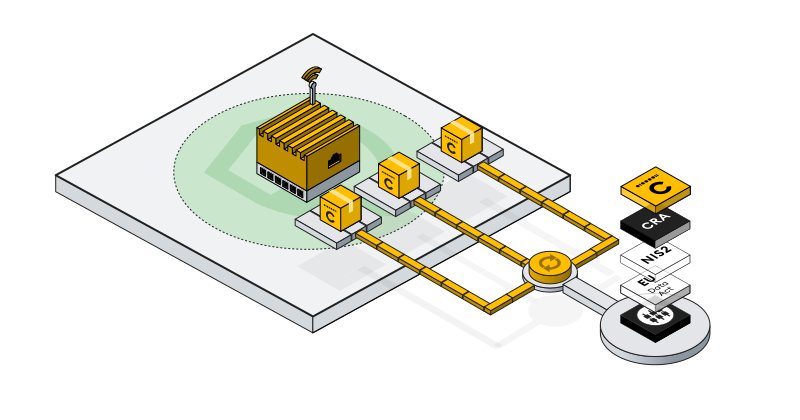
The CRA mandates cybersecurity for all products with digital elements. Manufacturers must build secure devices, manage vulnerabilities, and deliver verified updates throughout the product lifecycle.
Key requirements:
- Embed security by design and safe defaults
- Maintain SBOMs and vulnerability management
- Report exploited vulnerabilities within 24 hours
- Pass conformity assessments and maintain audit records
| Our CRA white papers | |
|---|---|
| A clear, high-level overview of the EU Cyber Resilience Act, explaining who it applies to, why it matters, and the key obligations every organization should understand. | Cyber Resilience Act Explained |
| Co-written with Silitics and EY, this deep dive breaks down the CRA’s technical requirements, compliance timelines, and what product and security teams need to do to prepare. | Cyber Resilience Act in Practice |
2. NIS2 Directive
What is the focus of NIS2? Operational and supply-chain resilience
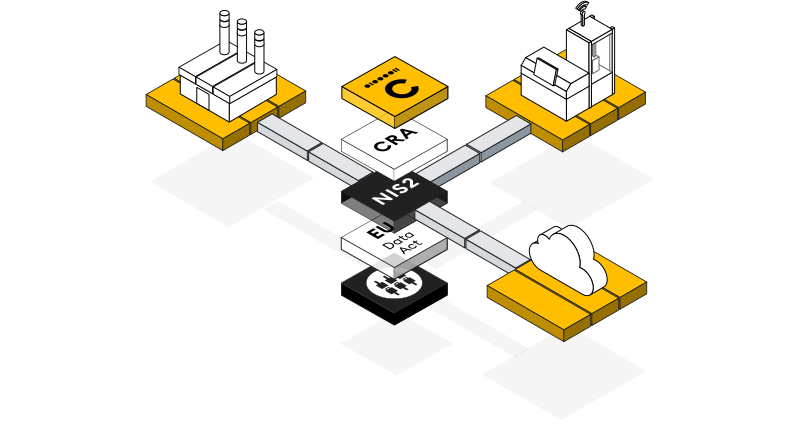
NIS2 broadens cybersecurity responsibility across operations and partners. It requires rapid incident reporting, continuous risk management, and executive accountability.
Key requirements:
- Detect and report major incidents within 24 hours
- Enforce supplier and partner security obligations
- Conduct ongoing audits and staff training
| Our NIS2 white papers | |
|---|---|
| A concise overview of the NIS2 Directive, explaining its scope, timelines, and why manufacturers play a critical role in their customers’ cybersecurity and operational resilience. | NIS2 Explained |
| Developed in collaboration with Lyxion, this paper explores how manufacturers can reduce compliance friction by aligning product design with NIS2 operational and audit realities. | NIS2 in Practice |
3. EU Data Act
Focus: Data access, sharing, and transparency
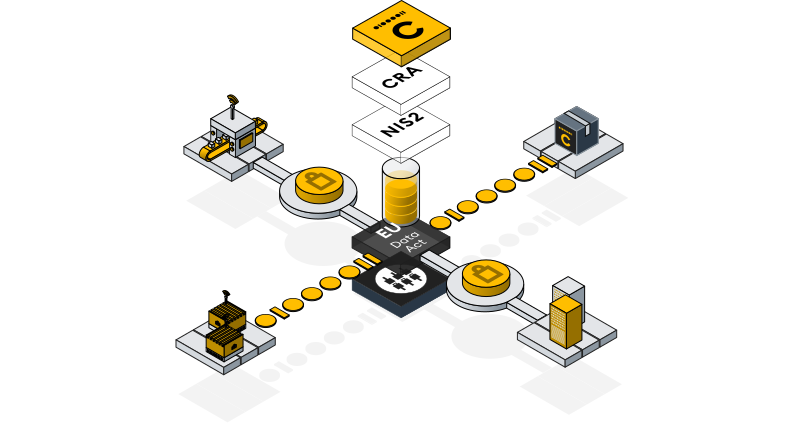
The Data Act governs who can access and use data from connected devices. It promotes user control, secure third-party sharing, and protection of trade secrets.
Key requirements:
- Provide users access to their device-generated data
- Enable secure third-party sharing via APIs
- Support service unbundling and prevent vendor lock-in
Learn how compliance can also unlock new data-driven business models in our complete guide to Europe’s digital regulations.
4. EU AI Act
What is the focus of the EU AI Act? Safe, transparent and responsible AI
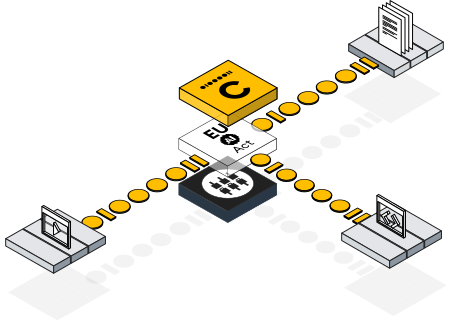
The EU AI Act introduces risk-based requirements for developing and deploying AI. It requires appropriate governance, transparency, human oversight, and accountability throughout the AI lifecycle.
Key requirements:
- Classify AI systems by risk and organisational role
- Maintain technical documentation, logging and traceability
- Ensure transparency and meaningful human oversight
- Implement risk management, data governance and cybersecurity controls
| Our EU AI Act white papers | |
|---|---|
| A clear, practical overview of the EU AI Act for product teams, explaining which AI capabilities fall within scope, how the risk-based approach works, and what organisations need to consider when building trusted, compliant AI-enabled products. | EU AI Act Explained for Product Teams |
| A practical guide to what the EU AI Act means for buyers of connected products, helping organisations understand which AI capabilities may fall within scope, how responsibilities vary by risk and role, and what to consider when adopting trustworthy AI-enabled solutions. | EU AI Act Explained for Buyers |
How the Regulations Work Together
| Regulation | Core focus | Impact on Smart Equipment Manufacturers |
|---|---|---|
| CRA | Product security | Secure development, updates, and monitoring |
| NIS2 | Operational resilience | Organization-wide risk and incident management |
| EU Data Act | Data transparency | Secure and compliant data sharing |
| EU AI Act | Data transparency | Risk-based AI development, oversight, and transparency |
Together, they form a connected framework, protecting devices, operations, and data across the entire lifecycle.
How Cumulocity Helps
Cumulocity provides built-in capabilities that help manufacturers address regulatory requirements and embed security, governance, and trust into connected products and operations:
- Fleet-wide device, data, and operational visibility
- Secure OTA updates with audit trails
- Data governance and access control
- Incident detection and operational monitoring
- Traceability and documentation to support regulatory assessments
- Lifecycle visibility and governance for AI-enabled products and services
With Cumulocity, manufacturers embed compliance into daily operations, reducing manual effort while building long-term resilience and trust.
Take the Next Step
Read our whitepapers for practical guidance
- European Regulation Overview: An explainer of CRA, NIS2 and EU Data Act
- Cyber Resilience Act: Explainer
- Cyber Resilience Act - Practical Guidance
- NIS2 Directive - Explainer
- NIS2 Directive - Practical Guidance
Talk to a Cyber Regulation Expert
Discuss CRA, NIS2, and EU Data Act implications with our specialists in EU digital and cybersecurity regulation.